

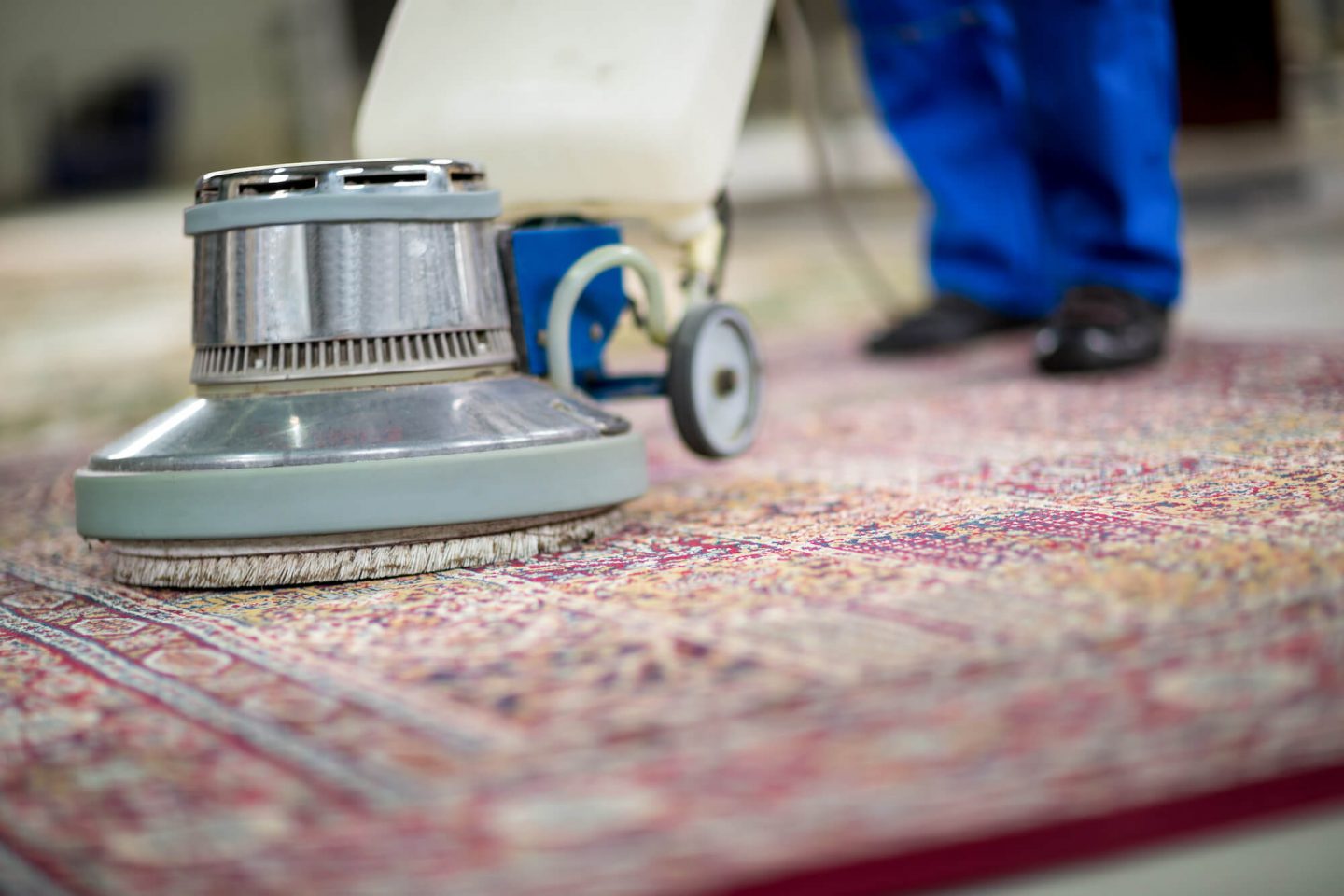
There is a common misconception among homeowners in the Coachella Valley that “cleaning is cleaning.” If a company cleans wall-to-wall carpet, surely they can clean the area rug in the dining room, right? Unfortunately, this assumption ruins thousands of rugs every year. While they both go on the floor, wall-to-wall carpet and area rugs are as different as a t-shirt and a tuxedo.
Wall-to-wall carpet is typically synthetic (nylon or polyester) and glued to a latex backing. It is designed to be cleaned with high heat and high pressure while staying in place. Area rugs, especially wool or silk ones, are woven. They have no latex backing and often use natural dyes. Treating an area rug like wall-to-wall carpet can lead to three disastrous outcomes: dye bleeding, shrinkage, and mildew.
The Danger of Dye Bleeding
The most immediate risk of in-home rug cleaning is dye migration (bleeding). Synthetic carpets have dyes that are “solution-dyed,” meaning the color is part of the fiber itself. You could pour bleach on them, and they often wouldn’t fade.
Fine area rugs, however, often use vegetable dyes or acid dyes that are not locked in as tightly. If a carpet cleaner sprays a high-alkaline pre-spray and hits it with hot steam, the reds and blues can destabilize and bleed into the white or cream areas of the rug. Once this happens, it is extremely difficult, and expensive, to reverse.
At a professional facility, we perform a “crock test” or dye stability test on every single rug before it gets wet. If the dyes are unstable, we use acidic stabilizers (mordants) to lock the color in before washing. This level of chemical precision is simply not possible with a truck-mounted steam unit in your living room.
The Drying Dilemma: Mildew and Dry Rot
The second major issue is drying. When you steam clean a rug on top of a wood or tile floor, the moisture gets trapped underneath. A wool rug can hold four times its weight in water. Without proper airflow, that moisture sits in the cotton foundation for days.
This creates the perfect breeding ground for mildew and mold. Over time, chronic moisture leads to “dry rot,” where the foundation fibers become brittle and snap like dry twigs. In a professional rug plant, we use centrifuges (giant spin cycles) to extract 95% of the water instantly. The rugs are then hung on racks in a temperature-controlled drying room with massive air movers. This controlled drying ensures the rug is crisp, soft, and completely dry within hours, preventing any microbial growth.
One Size Does Not Fit All
Wall-to-wall cleaners usually have one method: hot water extraction. But different rugs require different methods. A sturdy machine-made rug might handle immersion washing well, but an antique silk rug might need a low-moisture surface clean. A Tufted rug (held together with glue) creates a distinct challenge because water can dissolve the adhesive.
Professional rug cleaners are trained to identify the construction of the rug—Woven, Tufted, Hooked, or Knotted—and customize the cleaning protocol accordingly. Organizations like the Association of Specialists in Cleaning and Restoration (ASCR) define these standards, emphasizing that off-site cleaning is the only recognized method for thorough and safe rug care.
Your Palm Desert Experts for Specialized Rug Care
Don’t gamble with your decor. We understand the chemistry and construction differences that separate fine rugs from standard carpet, ensuring a safe and effective clean every time. Trust Magic Rug Cleaners to know the difference. Learn more about our facility-based Rug Cleaning Services or schedule a pickup today via our Contact Us link.