

In Palm Desert, we often worry about the sun and the dust, but there is a smaller, quieter threat hiding in the shadows of our homes. The Webbing Clothes Moth (Tineola bisselliella) is the natural enemy of fine textiles. Unlike other pests that are attracted to food crumbs, these moths have a specific appetite for keratin—the protein found in wool, silk, and other animal fibers.
Moth damage is heartbreaking because it often happens in the dark, unnoticed until it is too late. You might move a sofa for the first time in a year, only to find a patch of your expensive Persian rug has been eaten down to the cotton foundation. Understanding the lifecycle of these pests and how to repair the damage they cause is essential for any wool rug owner in the Coachella Valley.
It’s Not the Moth, It’s the Larvae
A common misconception is that the flying moths are the ones eating your rug. In reality, the adult moths do not have mouths; they only live to breed. The damage is done by the larvae.
Shutterstock
The female moth seeks out dark, undisturbed, and humid areas to lay her eggs—typically underneath furniture, in the back of closets, or on the underside of rugs. When the larvae hatch, they immediately begin consuming the wool fibers to fuel their growth. They are particularly attracted to rugs that are dirty. Microscopic traces of food spills, pet urine, or sweat act as a “seasoning” for the larvae, making the wool even more appetizing. This is why a clean rug is rarely attacked, while a dirty rug stored in a dark room is a prime target.
Spotting the Signs Early
Because the larvae are tiny and shy of light, you have to look closely to see them. The first sign is often “webbing”—a sticky, white, cobweb-like substance on the surface of the rug. You might also see “frass,” which looks like sandy grit but is actually the waste product of the larvae.
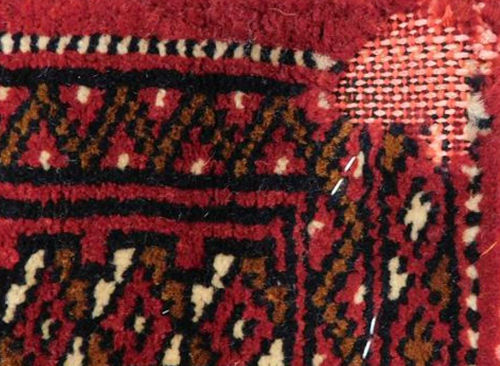
If you see bald spots where the pile is missing but the white cotton grid underneath is visible, you have an active infestation. (Cotton is a plant fiber, so the moths don’t eat it; they only eat the wool knots). Immediate action is required. Vacuuming alone won’t solve it, as the eggs are sticky and cling to the fibers. The rug must be professionally frozen or treated to kill the eggs and then thoroughly washed to remove the pheromones that attract future moths.
Repair: Rebuilding the Foundation
The good news is that moth damage is often repairable. Because the moths usually leave the cotton foundation intact, we can perform re-knotting.
This involves a skilled weaver matching the wool color and texture and hand-tying new knots onto the existing foundation. It is a meticulous process, but it can restore the rug to its original condition. For larger areas of damage, we can sometimes patch the rug using pieces from donor rugs of a similar age and origin. The key is to catch it early. Regular professional cleaning disrupts the lifecycle of the moth, washing away the eggs before they can hatch and cause expensive damage.
Your Palm Desert Experts for Moth Damage Repair
Don’t let pests feast on your investment. We offer specialized decontamination treatments and expert reweaving services to reverse moth damage. Trust Magic Rug Cleaners to protect and restore your textiles. Learn more about our preservation techniques in our Rug Cleaning Services section or schedule an inspection via our Contact Us page.