

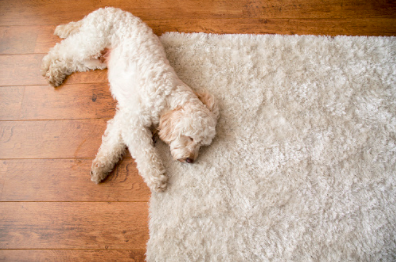
We love our pets. In Palm Desert, dogs are part of the family, joining us for morning hikes and relaxing with us in the evening. However, even the best-trained pets can have accidents, and when they do, your area rugs are often the first casualty. While a paper towel and some grocery store spray might make the stain look like it has disappeared, the smell often returns with a vengeance on the next humid day.
This recurring odor isn’t your imagination, and it isn’t because you didn’t scrub hard enough. It is a matter of chemistry. Pet urine is a complex cocktail of hormones, bacteria, uric acid, and ammonia. Addressing it requires more than just surface cleaning; it requires a scientific approach to neutralize the source of the odor deep within the fibers of the rug. Understanding why DIY methods fail is crucial to saving your rug from permanent damage and keeping your home smelling fresh.
The Science of the Stink: Uric Acid Crystals
When a pet urinates on a rug, the liquid acidifies. As it dries, the water content evaporates, but the solid waste remains. The most stubborn component is uric acid. Unlike the other components of urine, uric acid is not water-soluble. It creates microscopic salt crystals that bind tightly to the fibers of the rug.
Standard carpet cleaners and household sprays usually handle the water-soluble parts of the urine (the urea and urochrome), which is why the stain might fade. However, they leave the uric acid crystals behind. These crystals are hygroscopic, meaning they attract moisture from the air. When the humidity rises—or if you try to wash the spot with water later—the crystals reactivate and release that distinct ammonia gas smell. Resources like the Humane Society note that unless these crystals are enzymatically broken down or physically flushed out, the scent will act as a beacon, encouraging your pet to mark the same spot again.
Why Steam Cleaning Can Make It Worse
A common mistake homeowners make is hiring a standard carpet cleaner to “steam clean” a wool rug with pet accidents. High heat is the enemy of urine removal. If you apply high heat to a urine stain before the proteins and crystals are removed, you can permanently “set” the stain and the odor into the fiber. It effectively cooks the urine into the wool.
Furthermore, surface cleaning only treats the top inch of the rug. Urine is warm and acidic; it penetrates immediately through the pile, into the cotton foundation, and often into the backing or padding underneath. Cleaning the top of the rug does nothing for the reservoir of urine trapped in the foundation knots. This is why you might smell a “wet dog” or intensified urine odor immediately after a steam cleaning service. You have rehydrated the old urine without removing it.
The Solution: Total Immersion Washing
The only way to effectively remove pet urine from a hand-knotted or high-quality rug is through immersion washing. This is a process where the rug is fully submerged in a shallow pool of water and specialized cleaning solutions.
Think of it like washing a dirty sponge. You wouldn’t just wipe the top of the sponge; you would squeeze it underwater to flush out the contaminants. Immersion washing allows the cleaning solution to flow through the front and back of the rug, reaching the deep foundation where the uric acid crystals are hiding. We use specialized rollers and squeegees to physically push the contaminants out of the rug. This is often followed by an enzymatic bath, where safe biological agents “eat” the remaining organic matter. This process ensures that the rug is truly clean, not just visually acceptable.
Your Palm Desert Experts for Pet Odor Removal
Love your pets, but lose the lingering smells. We utilize advanced chemistry and traditional immersion techniques to neutralize odors at the molecular level, saving your rug and your indoor air quality. Trust Magic Rug Cleaners for guaranteed odor elimination. Explore our comprehensive Rug Cleaning Services or request an estimate via our Contact Us link.