

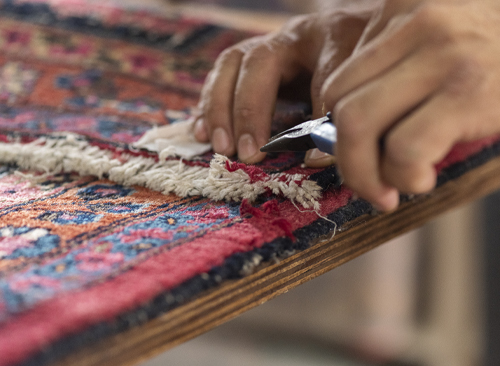
In our disposable culture, when something breaks or frays, the instinct is often to throw it away. However, fine area rugs are not disposable items; they are durable works of art designed to last for generations. In Palm Desert, where many homes feature exquisite interior design, a damaged rug doesn’t necessarily mean the end of the road. It creates an opportunity for restoration.
Rug repair is a specialized craft that sits at the intersection of history and weaving. Whether it’s a dog that chewed a corner, a vacuum cleaner that caught the fringe, or years of foot traffic wearing down the pile, professional repair can reverse the damage. But beyond aesthetics, timely repair is a critical financial decision. Ignoring a small unraveling edge is akin to ignoring a crack in your car’s windshield—it will only get bigger, more expensive, and eventually catastrophic for the rug’s structural integrity.
The Fringe Factor: More Than Just Decoration
The fringe—those tassels at the end of your rug—is not just decorative. It is the skeletal structure of the rug. The fringe is actually the exposed ends of the “warp” threads (the vertical foundation strings) that run the entire length of the rug. The knots that make up the pile are tied onto these strings.
When the fringe begins to unravel or wear away, there is nothing holding the knots in place. The rug will literally start to unzip, row by row. We frequently see rugs lose inches of length because a homeowner ignored a damaged fringe. Professional repair involves “overcasting” or “locking” the end to stop the unraveling. In severe cases, we can perform re-fringing, where new warp threads are woven into the rug to create a fresh, stable edge. This is a delicate procedure that requires matching the fiber content (cotton vs. wool) and tension of the original weave.
Reweaving: The Invisible Surgery
For holes, burns, or moth damage in the body of the rug, we turn to the art of reweaving. This is the plastic surgery of the rug world. A master weaver must rebuild the foundation (warp and weft) in the hole and then hand-tie new knots to match the original pattern.
This requires an incredible eye for color and design. The weaver must source wool that matches the age and texture of the original rug. Often, they have to dye the wool themselves to match the faded, antique colors surrounding the damaged area. When done correctly, the repair is virtually invisible to the naked eye. Museums like the Metropolitan Museum of Art rely on these exact techniques to maintain textiles that are hundreds of years old, proving that with the right care, almost any damage is reversible.
Color Run Correction
Another common issue we see in Palm Desert is color run (dye bleeding), often caused by DIY cleaning attempts or pet accidents. When fugitive dyes bleed into the creamy white areas of a rug, it can look ruined.
However, restoration experts have chemical protocols to “strip” the bleeding dye without harming the original design. This is a complex chemical process involving reducing agents and careful localized application. While not every rug can be saved, many can be brought back from the brink, restoring the crisp contrast that made the rug beautiful in the first place.
Your Palm Desert Experts for Rug Restoration
Don’t let damage dictate the life of your rug. We employ master craftspeople who can secure fringes, reweave holes, and correct color damage, preserving the value of your heirloom. Trust Magic Rug Cleaners to weave new life into your textiles. Learn more about our skilled Rug Cleaning Services or request a repair quote via our Contact Us page.