

How to Identify a Persian Rug
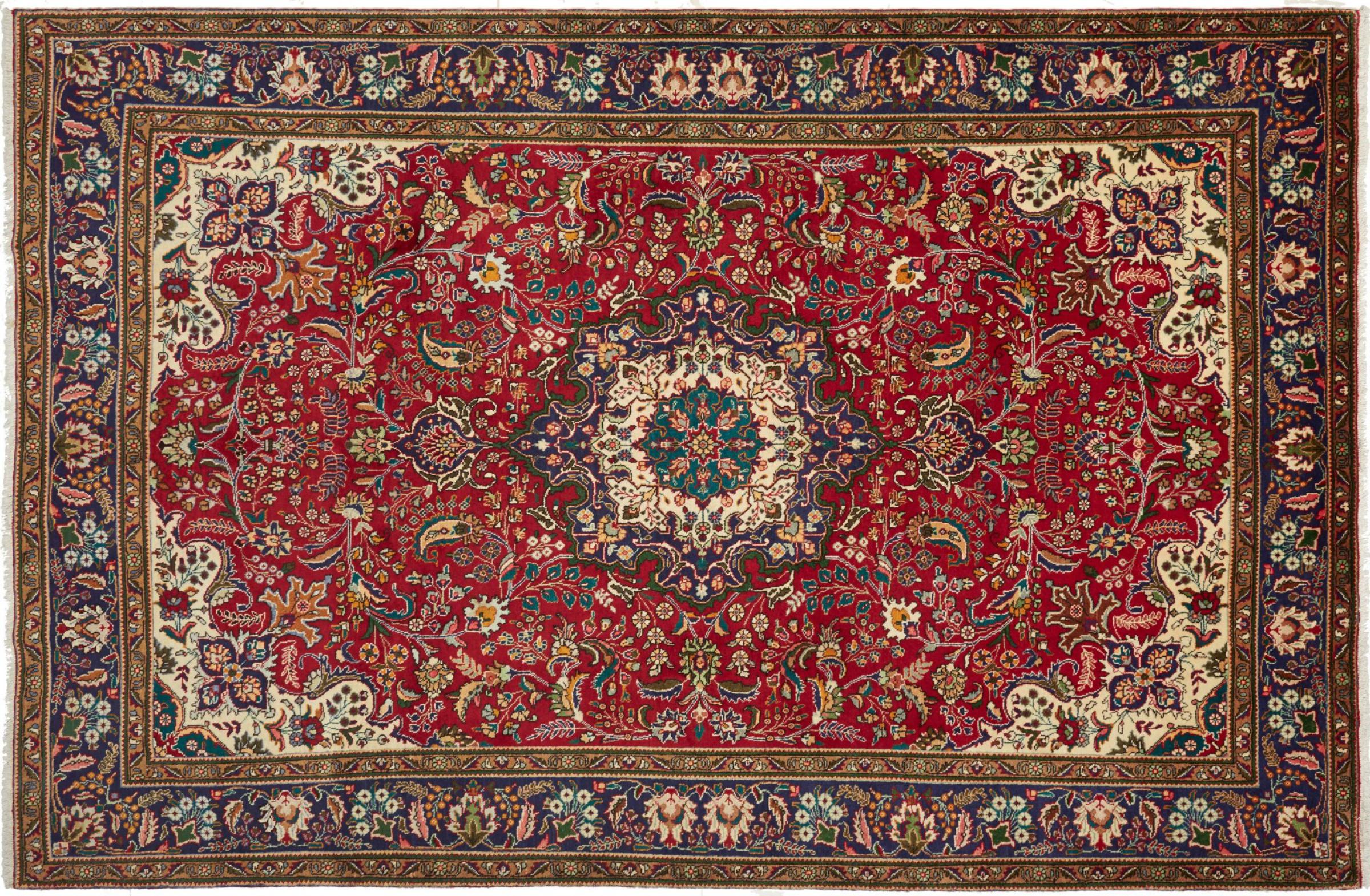




California homeowners often ask us how to tell whether a rug is genuinely Persian. The first thing to understand is that “Persian” refers to where the rug was made, not simply its pattern. A true Persian rug is produced in Iran and is usually hand-knotted using wool, silk, cotton, or a combination of these materials.
Many beautiful rugs are made in Turkey, India, Pakistan, Afghanistan, and other countries, but they should not technically be described as Persian rugs.
Look at the Back of the Rug
Turn over one corner and examine the underside. On a hand-knotted Persian rug, the design should be visible on the back, although it will usually appear less vivid than the front. You should also see individual knots rather than a plastic, rubber, or fabric backing.
Slight irregularities are normal. Handmade rugs are created one knot at a time, so the pattern and knot spacing may not be perfectly uniform. Machine-made rugs generally have a more mechanical appearance with extremely even stitching.
Check the Fringe and Materials
On an authentic hand-knotted rug, the fringe is normally an extension of the foundation threads running through the rug. It is not simply sewn onto the ends. Fringe that appears attached separately may indicate a machine-made rug or a later repair.
Traditional Persian rugs are commonly made with wool pile over a cotton foundation. Finer examples may contain silk highlights or be woven entirely from silk. Wool should feel resilient rather than overly slick or plastic-like.
Study the Design and Label
Persian rugs are often identified by weaving regions such as Kashan, Tabriz, Heriz, Nain, Qum, or Isfahan. Common features include central medallions, floral patterns, geometric details, and carefully designed borders. However, the pattern alone cannot confirm a rug’s origin because similar designs are reproduced around the world.
A label stating “Made in Iran” is helpful, but labels can be removed or replaced. Age, knot structure, dyes, materials, and construction should all be considered together.
Have the Rug Examined by a Specialist
Online photographs and home tests can provide clues, but valuable rugs should be inspected in person. An experienced specialist can examine the foundation, knot type, fiber, repairs, wear, and overall condition.
Magic Rug Cleaners provides professional Persian and Oriental rug cleaning from our Palm Desert facility. See our Persian Kashan rug cleaning project or browse our recent California rug care projects for examples of rugs we have inspected and cleaned throughout the Coachella Valley.