

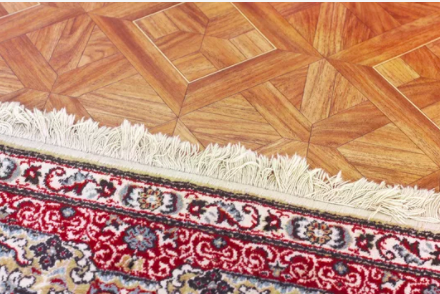
In the luxury homes of Palm Desert, area rugs are rarely just “floor coverings.” They are often hand-knotted masterpieces—Persian, Turkish, or Navajo textiles that represent hundreds of hours of artisan labor. Like a piece of fine art on your wall, these rugs are investments that can appreciate in value over time. However, unlike a painting protected behind glass, your rug endures daily foot traffic, desert dust, and UV exposure.
Preserving the value of a hand-knotted rug requires understanding what makes it special. It isn’t just a piece of fabric; it is a complex architectural structure made of wool, silk, or cotton. Treating it with the wrong chemicals or cleaning methods can strip it of its natural luster and destroy its structural integrity. To keep these heirlooms in the family for generations, you must move beyond simple “cleaning” and embrace the concept of conservation.
The Anatomy of a Knot: Why Surface Cleaning Fails
To understand why a quick steam clean is insufficient for fine rugs, you have to look at how they are built. A hand-knotted rug consists of the “warp” (vertical strings) and the “weft” (horizontal strings) which form the foundation. The pile is created by tying individual knots around these foundation strings.
Dirt in a hand-knotted rug doesn’t sit on top; it settles into the pockets between these knots, deep in the foundation. A standard vacuum or surface steam cleaner only addresses the top 20% of the fiber. It leaves the abrasive grit at the bottom of the knot, where it acts like a saw, cutting the fibers from the base up. Over time, this causes the rug to “bald” or wear out prematurely. True preservation requires a process that flushes contaminants all the way through the foundation, removing the grit that threatens the structural knots. This deep cleaning is impossible to achieve while the rug is sitting on your living room floor; it requires a specialized facility.
Protecting the Lanolin: The Wool’s Natural Shield
High-quality wool rugs are prized for their softness and sheen. This is largely due to lanolin, a natural waxy oil found in sheep’s wool. Lanolin acts as a protective barrier, repelling stains and keeping the fibers flexible and lustrous.
One of the biggest dangers of hiring an inexperienced cleaner is the use of harsh, high-alkaline synthetic detergents. These chemicals strip the natural lanolin out of the wool, leaving it dry, brittle, and dull. Once the lanolin is gone, the rug soils faster and feels like straw. Professional rug conservationists use pH-balanced, wool-safe shampoos that clean the fiber without stripping its essential oils. Resources like the Oriental Rug Retailers of America (ORRA) emphasize that proper chemistry is the difference between a clean rug and a ruined one.
Repair vs. Replace: The Economics of Care
A well-maintained Persian rug can last for over 100 years. In contrast, a machine-made rug might last 10. When you view your rug as a long-term asset, the cost of professional cleaning becomes a smart maintenance investment rather than a luxury expense.
Routine professional washing also allows experts to spot minor issues before they become major tragedies. A small unraveling of the “fringe” or the “selvage” (the side cords) can be repaired easily and affordably. If ignored, the entire knot structure can begin to unzip, leading to costly restoration or total loss. By having your rugs inspected and washed regularly, you are actively managing the condition of your asset, ensuring it retains its beauty and market value.
Your Palm Desert Experts for Fine Rug Preservation
Your rugs deserve the same level of care as your art collection. We utilize traditional washing methods combined with modern technology to safely clean and preserve your most valuable textiles. Trust Magic Rug Cleaners to protect your investment. Discover our specialized Rug Cleaning Services or arrange a consultation via our Contact Us page.